Why Your Next Trip Needs a Digital SIM Card
 テオリア事務局
Why A Travel eSIM Is The Only SIM You Need For Your Next Trip
Imagine landing in Tokyo and having mobile data ready to go before you even clear customs. A travel eSIM is a digital SIM card you install on your phone, allowing you to connect to local networks instantly without swapping physical cards. This means you skip expensive roaming fees and enjoy seamless connectivity wherever your trip takes you. Simply scan a QR code before you depart, and you’ll have reliable internet for maps, messaging, and sharing photos the moment you arrive.
Why Your Next Trip Needs a Digital SIM Card
You land in a new city, exhausted, and the airport Wi-Fi won't send a single message. The hunt for a local SIM begins. A travel eSIM erases that entire ritual. You buy it online before your trip departs, and the moment your plane touches down, it activates automatically. No tiny cards to lose in a rental car. No fumbling with passport copies at a kiosk. You remain on your own phone number for banking texts, while the eSIM gives you local data instantly for navigation and ride apps.
The real relief is not needing to find a store when you're jet-lagged.
It turns that first stressful hour of arrival into seamless connectivity, letting you focus on the city, not the logistics.
Cutting the Cord from Plastic SIMs for Global Roaming
Ditching the plastic SIM is the ultimate hack for global roaming. You avoid fumbling with tiny trays at airports or hunting for local vendors in a new country. Instead, seamless multi-country connectivity kicks in the moment you land, often with a single QR code scan. No more swapping cards between your home and a local line, risking losing your original. Your phone number stays active via WiFi calling, while a data-only eSIM handles everything else. This eliminates physical SIM fees and the hassle of juggling multiple profiles for different regions.
- Activate a roaming plan before departure, not upon arrival.
- Keep your home SIM active for two-factor authentication.
- Use a digital wallet to instantly top up data mid-trip.
- Store multiple country profiles on one phone without carrying extras.
The Hidden Costs of Traditional International Data Plans
Traditional international data plans often conceal costs that inflate your travel budget. You pay a daily roaming fee of $10–$25, yet frequently face a strict data cap of 200–500 MB before throttling to unusable 2G speeds. Each incoming call or voicemail triggers a per-minute charge, often $0.50–$2.00. Activation itself can incur a one-time connection fee, and canceling the plan may require a early termination penalty. A clear sequence of hidden charges includes:
- Daily access fees accumulating across multi-week trips.
- Overage charges for incidental photo uploads.
- Premium surcharges for tethering your laptop.
These costs easily triple your anticipated connectivity expense, making travel eSIMs a straightforward budget fix.
How Embedded SIM Technology Actually Works

An embedded SIM, or eSIM, is a tiny, rewritable chip soldered directly into your phone’s motherboard, unlike a physical SIM card you have to slot in. For travel eSIM, this means you scan a quick QR code from a provider, which downloads a digital profile onto that chip. Your phone then uses this profile to securely authenticate with local networks abroad, bypassing your home carrier entirely. You can store multiple profiles on one eSIM, letting you switch between a Spanish data plan and a Japanese one without swapping any plastic. However, you typically can only use one mobile network profile at a time, so toggling between them is a quick settings change. This process is entirely digital, so you buy, install, and activate a travel plan before you even leave home, connecting instantly upon arrival. No tiny trays to lose, no roaming fees to fear.
Understanding Remote Provisioning for Phones
Remote provisioning allows a phone to download and install a travel eSIM profile directly, eliminating the need for a physical SIM swap. When you purchase a travel eSIM, the profile is pushed to your device’s embedded SIM via a QR code or app. The phone’s eSIM hardware then securely stores this profile, which contains your new data plan credentials. To activate, you simply scan the code or tap in the app, and the remote provisioning process installs the settings within minutes. Your phone remains connected to its original line while the new profile adds a second network for roaming, managed through the device’s SIM manager.
Compatibility Matrix: Which Devices Support the Switch
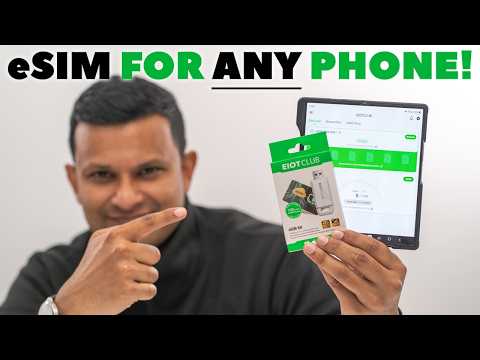
A compatibility matrix for travel eSIM clarifies that the device must be eSIM-capable and carrier-unlocked. Most recent flagship models from Apple, Samsung, and Google support eSIM, but older devices often lack the hardware. Not all “eSIM ready” phones can use a travel eSIM profile from a third-party provider, as some manufacturers restrict functionality to specific carriers. To confirm compatibility, the user must check the device’s IMEI against the travel eSIM provider’s published list; a mismatch may require a physical SIM alternative. The matrix explicitly excludes devices without integrated eSIM chips.
Top Destinations Where Digital Roaming Shines
In the chaotic spice markets of Marrakech, where physical SIM cards are a scavenger hunt, digital roaming via eSIM lets you pull up a map without breaking stride. Stuck in a Tokyo subway labyrinth at midnight? Your eSIM switches networks seamlessly, keeping Google Maps alive. On a ferry between Greek islands, where local kiosks vanish with the tides, digital roaming shines—you board with instant connectivity, not a frantic search for a store.
The real magic happens in multi-country trips like a Balkan road trip, where crossing from Croatia into Montenegro means your eSIM adjusts automatically, while locals fumble with physical swaps.
For a spontaneous detour in Bali, it’s the difference between booking a last-minute villa on the fly and hunting for a convenience store that sells tourist SIMs.
Seamless Connectivity Across Asian Hotspots
Across Asia’s digital hubs—from Tokyo’s transit systems to Bangkok’s street markets—a travel eSIM provides seamless connectivity across Asian hotspots without swapping physical SIMs. In Seoul, you instantly map subways; in Bali, you book rides from the airport. Jumping from Singapore’s smart city networks to remote Chiang Mai cafés requires no reconfiguration. The eSIM auto-connects to local carriers, maintaining LTE or 5G speeds for maps, payments, and messaging. This eliminates hunting for Wi-Fi passwords or queuing at kiosks, ensuring your data plan follows you across borders, not your physical SIM.
Seamless connectivity across Asian hotspots means one eSIM for instant, auto-switching data across multiple countries—no SIM swaps, no Wi-Fi hunting.
European Union Coverage Without Country-by-County Hassles
A travel eSIM eliminates the need to purchase separate data plans for each Schengen nation. You activate a single European Union eSIM profile before departure, and your device automatically connects to local networks as you cross borders from France into Germany or Italy into Spain. This seamless EU roaming experience means no swapping physical SIMs, no searching for local providers in each country, and no unexpected roaming charges. The connection remains stable during train travel between capitals, as the eSIM re-registers on the strongest available tower without user intervention. Your data allowance is consumed from one pool, regardless of which EU country you are currently in.
| Aspect | Country-by-Country eSIM | Single EU eSIM |
|---|---|---|
| Setup | Download separate profile per nation | Install one profile for all EU members |
| Border transitions | Manual profile switching required | Automatic network handoff |
| Data management | Track multiple remaining balances | Single data pool for entire trip |
Remote Adventures with Reliable Signal in Africa
For off-grid treks in Namibia’s Skeleton Coast or gorilla tracking in Uganda’s Bwindi, a travel eSIM ensures reliable signal for remote African adventures. Unlike physical SIMs, you switch to local networks like MTN or Safaricom instantly, bypassing spotty roaming. Maps load for navigating the Serengeti, and WhatsApp works for coordinating with guides in Madagascar’s rainforests. In Morocco’s Atlas Mountains, you share live photos without hunting for Wi-Fi. The eSIM’s multi-network profile means you drop dead zones—camping in Botswana’s Okavango Delta, you stay connected for emergency updates or sunset streams. No fumbling with tiny SIM cards on dusty trails.
Comparing Local SIM Cards vs. Global Data Services

Choosing between a local SIM and a global data service for travel eSIM comes down to your itinerary and priorities. A local SIM often offers cheaper data for deep dives into one country, but requires physical swapping and multi-network juggling across borders. Global data services, like travel eSIMs, win on instant activation and seamless connectivity in multiple nations from a single profile, though costs per GB are higher. Q: Should I use a local SIM or global eSIM for a 5-country trip? A: A global travel eSIM, for its sheer convenience and elimination of physical SIM hunts at each destination. For a month in one city, a local physical SIM’s value might outweigh the setup hassle.
Speed and Latency Tradeoffs in Different Regions
When traveling, a local SIM often wins on raw speed in a single region, while a global data service trades top-tier velocity for convenience across many areas. In parts of Europe or Japan, a local card can hit faster regional speeds with lower latency due to direct network access. In more remote areas, though, a global provider might perform worse because it routes through another country. Your YouTube video might buffer in rural Thailand with a global plan, whereas a local SIM would stream it instantly.
- Global data can suffer 100–200ms latency spikes in South America due to backhaul routing.
- Local SIMs in East Asia often achieve under 20ms ping for gaming.
- In Africa, a global eSIM might be slower but saves you from buying multiple local cards.
Cost Per Gigabyte When Bypassing Airport Kiosks
Bypassing airport kiosks typically reduces the cost per gigabyte when bypassing airport kiosks by 40–70%, as local SIMs from city retailers or online eSIM providers avoid the premium markups on kiosk convenience fees. For example, a 10 GB kiosk plan at $30 equals $3/GB, while a local SIM purchased outside the terminal may offer 20 GB for $8, or $0.40/GB. This gap widens with high-data usage; short trips under 5 GB see smaller savings, whereas travelers needing 10+ GB benefit most from lower per-gigabyte rates outside the airport.
Activating and Managing Profiles Without a Physical Swap
With travel eSIM, activating profiles without a physical swap means you simply scan a QR code or download an app to add a data plan directly to your phone. There’s no tiny card to fumble with, so you keep your home SIM intact. Managing profiles is just as easy: you can toggle between plans in your settings—turning one off and another on—to control data usage or switch providers instantly. No need to carry a paperclip or risk losing your primary line.
What happens if I want to switch back to my home SIM mid-trip? You don’t need to remove or reinsert anything—just go into your phone’s cellular settings and enable your primary line. The eSIM profile stays dormant until you activate it again.
Selecting the Right Data Package for Your Itinerary
Selecting the right data package for your itinerary requires matching the eSIM plan’s validity to your trip duration. First, confirm your destinations are covered by the provider’s regional or global zone. For mixed travel across several countries, a regional eSIM plan is often more cost-effective than multiple local ones. Always check if the plan offers a hard data cap or a soft throttle after depletion, as this affects high-usage tasks like navigation. Prioritize a plan with at least 1–3 GB per day for streaming and mapping, while lighter users can opt for lower allowances to save costs. Verify package activation starts on your first use, not purchase date, to avoid wasted days.
Short-Term City Breaks vs. Cross-Continent Journeys
For a short-term city break, a regional or single-country travel eSIM with a small data cap (1–3 GB) suffices for navigation and social media. In contrast, cross-continent journeys demand a global eSIM with multi-operator coverage to ensure connectivity across varying infrastructures. The former prioritizes high-speed data in dense urban zones, while the latter needs broad, reliable access for transit between countries, often requiring top-up flexibility. Choosing based on trip scope prevents overpaying for unused data or facing connectivity gaps.
- City breaks: pick a local eSIM with 3–7 days validity.
- Cross-continent: select a global plan covering multiple countries.
- City breaks: prioritize speed for maps and instant messaging.
- Cross-continent: prioritize coverage over raw speed.
Unlimited Plans Versus Tiered Data Caps
When picking a travel eSIM, the core choice is between unlimited plans versus tiered data caps. An unlimited plan is perfect if you plan to stream videos, use GPS heavily, or don’t want to check your usage—but watch for "fair usage" speed drops after a set threshold. Tiered data caps work better for light users who just check maps or messages, offering a lower price and full-speed data until your precise gigabyte limit runs out.
- Unlimited plans risk throttled speeds after heavy use, while tiered caps guarantee full speed until your data is gone.
- Tiered plans let you buy exactly what you need, saving money for shorter trips or light data habits.
- Unlimited plans give peace of mind for video calls, social media, and navigation without counting megabytes.
- With tiered caps, you can easily top up if you run low, avoiding overpaying for data you won’t use.
Regional Bundles That Save Money on Multi-Country Trips
For multi-country trips, selecting a regional eSIM bundle is the most cost-effective strategy, as it pools data across multiple nations under a single price. Instead of purchasing separate local plans for each border crossing, you buy one regional allowance. Always verify the specific countries in the bundle, as coverage can vary between providers. To maximize savings, follow this sequence:
- List all countries on your itinerary.
- Compare regional bundles (e.g., Europe, Asia, Global) that cover your entire route.
- Check if the bundle includes data-only or also supports calls, matching your travel needs.
This approach eliminates roaming surcharges per country and simplifies top-ups.
Step-by-Step Setup Guide for a Connected Adventure
First, ensure your phone is unlocked and compatible with an eSIM. Purchase your travel eSIM plan from a provider before departure, carefully selecting the data amount for your trip. Upon arrival at your destination, scan the QR code sent to your email or manually enter the activation details in your phone’s cellular settings. Name the new line clearly, like "Japan Data," and set it as your primary data line while keeping your home line for iMessage or calls. Troubleshoot by restarting your device if you don’t see a signal immediately. Enable data roaming for this specific line—it's essential even for local networks. Double-check your APN settings under cellular data options if internet fails; some providers require manual entry. Remember, you can usually manage multiple eSIMs, so don't delete your main one until you're sure everything works.
Scanning QR Codes and Installing Profiles
After purchasing your travel eSIM, locate the QR code in your confirmation email or provider app. Open your device’s settings, navigate to cellular or mobile network settings, and select "Add eSIM." Scan the provided QR code with your device’s camera. Once recognized, follow on-screen prompts to confirm installation, naming the profile (e.g., "Japan Data") for easy identification. The profile will download and activate, often requiring a device restart. Ensure you have a stable internet connection during this process to avoid partial installation. After activation, verify the new line appears in your cellular plans list.
Switching Between Primary Line and Travel Data
To manage connectivity, first disable your primary line’s data roaming in your phone’s SIM settings, leaving it active only for calls and SMS. Then, enable your travel eSIM’s data line. For both lines to function simultaneously, set the eSIM as the default for mobile data while keeping the primary line for voice and iMessage. This prevents accidental roaming charges on your home carrier. Dual SIM priority settings in your device allow this split, ensuring seamless data switching without toggling each line manually.
Switching between primary line and travel data requires setting your primary line to voice-only while assigning data exclusively to the eSIM, avoiding roaming fees and maintaining call access.
Troubleshooting Common Activation Errors
When an eSIM fails to activate, first confirm troubleshooting common activation errors by checking that your device is unlocked and connected to Wi-Fi. Manual APN entry (often “internet” or “mbnet”) resolves many data failures. If no signal appears, toggle Airplane Mode or restart the phone. Ensure the QR code or installation link hasn’t expired—most are valid only within a few hours of purchase. For dual-SIM setups, disable the primary line temporarily to avoid conflicts.
Key fixes: verify device unlock, re-enter APN, restart device, and use an unexpired QR code.
Maximizing Battery Life While Roaming Abroad
The rain in Tokyo was relentless, and my phone’s battery was dropping fast as I relied on my travel eSIM for maps. I quickly learned to maximize battery life while roaming abroad by disabling the device’s native SIM in settings, forcing the phone to only connect to the eSIM’s single, low-powered network profile instead of scanning multiple bands. Switching to airplane mode and manually re-enabling just the eSIM saved another 20% before dinner. Downloading offline maps via the eSIM’s data, rather than streaming them, kept the battery stable during the long subway shuffle.
Disabling Background Data Without Killing Navigation
To preserve battery with a travel eSIM, disable background data for apps that don't need constant updates, such as social media or email, but keep it active for your mapping app. This prevents unnecessary power drain from unsolicited data syncing. Your navigation will still operate when opened, using live traffic data and routing. For controlled background data usage, manually configure each app's settings rather than using a global toggle.
- Restrict background data for non-essential apps via your phone's data usage settings, leaving mapping tools unrestricted.
- Enable "Low Data Mode" for the travel eSIM to limit background network activity without fully blocking navigation.
- Pre-download offline https://baztel.co/esim-plans/esim-singapore maps for your destination to reduce reliance on real-time data, further saving battery.
Using Wi-Fi Assist Features Smartly

When roaming with a travel eSIM, smart management of Wi-Fi Assist is critical for battery conservation. This feature automatically switches to cellular data when Wi-Fi is weak, but abroad it triggers constant signal searching, draining your battery. Disable Wi-Fi Assist entirely in your device’s cellular settings to prevent this. Alternatively, toggle off unnecessary Wi-Fi scanning under location services. A precise Q&A: Does Wi-Fi Assist drain battery even when connected to strong Wi-Fi? No, it only activates during poor connections, but in foreign environments, fluctuating signals make it fire repeatedly—so turning it off is safest.
Managing Multiple eSIM Profiles Efficiently
When roaming, managing multiple eSIM profiles efficiently prevents battery drain from idle network searches. Prioritize by deactivating domestic or unused profiles via your device’s cellular settings, leaving only the active travel eSIM enabled. To streamline, disable automatic network selection on every inactive profile; this stops your phone from constantly scanning for signals. For a clear sequence:
- Open settings and list all installed profiles.
- Disable all profiles except the primary travel eSIM.
- Set the travel profile to “manual” network selection to avoid background scanning.
This isolates power consumption to only the active line, extending standby time.
Security Considerations for Digital Roaming
Imagine you're boarding a flight to Barcelona, your travel eSIM already installed, promising seamless connectivity. But as you land and your phone latches onto a foreign network, you've entered the "Security Considerations for Digital Roaming" zone. The immediate risk is a SIM swapping attack, where a malicious actor exploits weak customer support to steal your number. Unlike a physical SIM, your eSIM profile is remotely provisioned, so if your primary account gets compromised, an attacker can transfer your digital line to their device. Always protect your mobile carrier account with a strong, unique password and enable two-factor authentication before you travel. Additionally, public Wi-Fi in airports or cafes often lures your device into man-in-the-middle attacks; your travel eSIM provides a private data tunnel, but ensure you turn off automatic Wi-Fi joining to stay in control of your connection.
Encrypted Connections Over Public Mobile Networks

When roaming with a travel eSIM, your data traverses public mobile networks where interception points lurk. An encrypted connection, such as a VPN tunneled through your eSIM’s data path, scrambles all traffic, making it unreadable to hotspot snoops or carrier-side eavesdroppers. Without this layer, airport Wi-Fi or even the cellular backbone itself exposes login details. Always verify your travel eSIM app offers native encryption protocols, not just a “secure” label. End-to-end tunnel security ensures your banking sessions or private chats remain opaque, even on congested foreign towers.
How does a travel eSIM’s encryption differ from standard Wi-Fi encryption? It wraps your data at the device level before it hits the cellular carrier, meaning even the roaming partner cannot decrypt your actual traffic, unlike Wi-Fi where the hotspot owner sees unencrypted payloads.
Why Private VPNs Still Matter Abroad
Even with a travel eSIM rerouting your connection, a private VPN remains essential abroad because it encrypts your data before it touches the hotel’s or café’s public Wi-Fi, closing the gap that the eSIM’s own network encryption cannot reach. A travel eSIM secures the data link to your carrier, but it does not protect your traffic once it reaches the open internet beyond that link. Without a VPN, sensitive actions like banking or logging into work platforms are still exposed to local snooping or man-in-the-middle attacks. Private VPN encryption ensures end-to-end confidentiality beyond the eSIM’s mobile network, making it a non-redundant shield for any digital roaming activity.
Locking Down Your Phone Before Crossing Borders
Before activating a travel eSIM, lock down your phone against border surveillance by removing biometric unlocks. Disable Face ID or fingerprint access, relying solely on a strong alphanumeric passcode. This prevents authorities from physically compelling you to unlock the device. Erase all cached trip data—messaging apps, local maps, and browser history—from the phone’s internal storage. A proactive factory reset before crossing can be faster than justifying a locked device under pressure. Finally, disable cloud syncs and log out of primary accounts until you’re past security, ensuring no data auto-transfers to your eSIM’s new network.
Future Trends Shaping Global Mobile Connectivity
The future of travel eSIM hinges on seamless, multi-network orchestration. Devices will automatically connect to the strongest local signal without manual profile switching, eliminating dead zones across borders. A key trend is real-time adaptive bandwidth, where your eSIM prioritizes low-latency routing for video calls over basic browsing. Expect embedded AI to pre-cache essential maps and translations in the background during off-peak hours, ensuring critical data is available offline. This shift toward intelligent connectivity handoffs means travelers will experience a single, fluid network as they cross borders, with the eSIM acting as an invisible, proactive carrier rather than a passive data plan.
The Rise of Pay-As-You-Go Digital Roaming Apps
The Rise of Pay-As-You-Go Digital Roaming Apps transforms travel connectivity by letting you purchase data in bite-sized chunks directly from your phone. Instead of committing to a hefty global plan, you select a country-specific pass and activate it instantly via a companion app. These apps often include a clear burst mode for high-speed data, then throttle your connection after you exhaust your allowance, preventing bill shock. Real-time data monitoring is critical here. A typical sequence looks like:
- Download the app before departure.
- Select a destination and data volume from a simple menu.
- Activate the eSIM profile with one tap upon landing.
- Top up or buy a new pack as needed, avoiding any contract or expiry pressure.
Satellite Integration for Off-Grid Travelers
Satellite integration enables travel eSIM users to maintain connectivity beyond terrestrial tower range. Direct-to-device satellite links now allow emergency messaging and low-bandwidth data from remote wilderness areas without specialized hardware. A modern eSIM automatically switches between cellular and satellite networks, preserving battery by prioritizing ground signals when available. This seamless handover requires the eSIM to manage two distinct network profiles simultaneously. Data speeds remain limited to text and location pings, making satellite integration unsuitable for streaming but critical for safety check-ins and navigation updates.
Satellite integration within travel eSIMs turns any off-grid location into a reliable, low-bandwidth communication node for safety and coordination.
Carrier Agnosticism and the End of Roaming Fees
Carrier agnosticism liberates travelers from legacy roaming fees by severing the connection between a physical SIM and a single network provider. With travel eSIM, your device dynamically selects the best available local network, bypassing your home carrier’s inflated international rates. This means you pay local prices abroad, not daily roaming surcharges. The end of roaming fees is a direct consequence: you control data purchases through a virtual eSIM profile, not a roaming package. Carrier agnosticism eliminates roaming charges at the point of connection, ensuring seamless, cost-effective global access without any contractual carrier dependency.